<?xml version="1.0" encoding="utf-8"?><feed xmlns="http://www.w3.org/2005/Atom" xml:lang="en"><generator uri="https://jekyllrb.com/" version="4.3.3">Jekyll</generator><link href="https://kolli.vercel.app/feed.xml" rel="self" type="application/atom+xml" /><link href="https://kolli.vercel.app/" rel="alternate" type="text/html" hreflang="en" /><updated>2026-01-03T21:46:19+05:30</updated><id>https://kolli.vercel.app/feed.xml</id><title type="html">Rishi’s Bay</title><subtitle>Hey There! This website talks about me and my thoughts listed in my blog. Feel free to drop me a note if you have ideas</subtitle><author><name>Rishi Kashyap</name></author><entry><title type="html">Admit to an MBA program - Why? How? What?</title><link href="https://kolli.vercel.app/mba/2025/03/15/mba-process.html" rel="alternate" type="text/html" title="Admit to an MBA program - Why? How? What?" /><published>2025-03-15T18:00:00+05:30</published><updated>2025-03-15T18:00:00+05:30</updated><id>https://kolli.vercel.app/mba/2025/03/15/mba-process</id><content type="html" xml:base="https://kolli.vercel.app/mba/2025/03/15/mba-process.html"><![CDATA[<p><img src="/assets/images/graduation.jpg" alt="Graduation banner" style="align:left" /></p>

<p>I decided to pursue my MBA around the end of 2023. <strong>Why?</strong> I felt I needed a change in my life and wanted exposure to new experiences and a new environment. I had lived in my home city my entire life. It was also a chance for me to learn new professional and personal skills, learn about myself and my capabilities, and connect with professionals from across the world to get new ideas and inspiration.</p>

<h2 style="margin-top: 15px;" id="the-why-defining-your-goals">The “Why”: Defining Your Goals</h2>

<p>Knowing the “why” is super important. It is not only a common question in MBA interviews but also a question that you and the people around you will keep asking. Having a clear goal regarding why you are moving to a new country to attend a new school and paying hefty fees for a degree is a must before making that decision.</p>

<p>Knowing the “why” will also help you figure out what you want from the MBA program. The value of an MBA today isn’t the same as it was in 2012. With AI, the dynamics around degrees are changing, so it is really important to know what you want out of the program.</p>

<ul>
  <li>Is it to <strong>build a network</strong>?</li>
  <li>Is it to <strong>switch careers</strong>?</li>
  <li>Do you want to <strong>start a new business</strong>?</li>
  <li>Do you want to <strong>strengthen your current career</strong>?</li>
  <li>Do you want to <strong>change where you work</strong>?</li>
</ul>

<p>These are all good reasons to pursue a masters program like a MBA. Again, the choice of the school depends on some of these factors. For example, if you want to work in the US, you should pursue an MBA at a US school.</p>

<h2 style="margin-top: 15px;" id="the-how-and-what-a-step-by-step-guide">The “How and What”: A Step-by-Step Guide</h2>

<p>Getting into a school requires quite a bit of work.</p>

<h3 style="margin-top: 15px;" id="1the-exams">1.The Exams</h3>
<p>First are the two exams- one checking your analytical ability and the other your English language skills. <strong>GRE/GMAT</strong> or university-driven exams (only some schools have them) are required by almost all schools. You can sometimes get a waiver on the exam, but this often reduces your chances of selection and receiving a scholarship (even if schools claim it doesn’t).</p>

<p>Getting a good score is the first hurdle. If you can crack anything <strong>above 700 on the GMAT</strong>, you are in a good position to get into a top program. There are other parameters, like your work experience and essays, but this is the first filter.</p>

<ul>
  <li><strong>Cost:</strong> The application fees aren’t cheap (around Rs. 23k or $240 for the GMAT). Giving it your best shot on the first attempt will save time and money.</li>
  <li><strong>Preparation:</strong> The best way to prepare is to learn and do mock tests on a computer in the GMAT format, within a timed environment and with progressive difficulty. Timed mock tests are vital to improving your chances of a high score.</li>
</ul>

<p>Once you’ve done this, you also need to take an English language test if the MBA is delivered in English. <strong>TOEFL</strong> and <strong>IELTS</strong> are the two big ones. I’ve written about IELTS in <a href="https://kolli.vercel.app/general/2024/09/05/ielts.html"> this blog </a> previously. Some schools allow you to submit scores after your application, up until a certain date.</p>

<h3 style="margin-top: 15px;" id="2-choosing-the-schools">2. Choosing the Schools</h3>
<p>This goes back to your goals. Which region? What are you specializing in? MBA school rankings provide decent criteria for choosing schools, but you must do your own research about the programs and what they specialize in (e.g., some schools are known for consulting). Organize schools into 3 buckets: Dream, Good to have, Safe.</p>

<p>“Safe” schools are the ones where you know it is fairly easy to get in compared to the other two. It is crucial to spend time on this because once you move to step 3, it is difficult to come back.Rankings that people usually check: Financial Times (FT), QS, Poets &amp; Quants. It is imperative to understand the ranking logic before jumping to conclusions. Moreover, rankings are just a guide. Talking to alumni and current students, and attending admission events will help you gauge the programs better than blindly following the rankings. Some schools offer an <strong>application fee waiver</strong> (fees range from ~$100 to ~$200) if you attend their admission events. These events include program briefings, alumni interviews, Q&amp;A sessions, etc. Try to make good use of them.</p>

<h3 style="margin-top: 15px;" id="3-application--materials">3. Application &amp; Materials</h3>
<p>Once you’ve finished the test and locked in the schools, it’s time to prepare the application materials. You will need to decide which round to apply to well in advance so that you can work backward. Typically schools have 3 rounds, but this number varies.</p>

<p><strong>Round 1 is the best time to apply</strong> as you will be in the first pool of students and the entire scholarship fund balance will be available. As you progress through the rounds, filters start thinning your chances. If many engineering students get accepted in the first round, for example, an individual with the same background might find it harder in later rounds. Schools try to balance class profiles across nationalities, professional backgrounds, and age to maintain diversity. Scholarship funds are also used up by the 2nd and 3rd rounds.</p>

<p>These rounds are lined up targeting the Fall intake (September). Some schools also offer a Summer intake or even a January intake. Additionally, applying earlier means you will have ample time for your visa application if you are moving abroad.</p>

<h4 style="margin-top: 15px;" id="application-materials">Application Materials</h4>
<p>You will find the requirements on the school websites. Typically, this involves:</p>
<ul>
  <li><strong>Essays:</strong> 3-4 questions relating to your goals, scenarios, and problem-solving (usually based on the <strong>STAR format</strong>).</li>
  <li><strong>Recommendation letters.</strong></li>
  <li><strong>Resume.</strong></li>
  <li><strong>Personal details:</strong> Educational and professional history.</li>
</ul>

<p>Essays are a huge part of an application. They usually cover questions like: <em>Why this school? What are your goals after the MBA? How will you contribute to diversity?</em> Some schools use a different mode of delivery, asking you to prepare a PPT or a video answering some of these questions.</p>

<p><strong>A Note on Consultants:</strong>
There are many consultants out there who can help you with this. <strong>Note: Use consultants only for essays.</strong> They usually charge a bomb (north of Rs. 3L or $3000) for full counseling and support (shortlisting schools, essays, mock interviews). From my experience, they are only useful for helping you write and polish your essays. The rest is something you can do better yourself. Don’t waste money on MBA education consultants in this day and age.</p>

<p>Be honest with the essays. Faking it will only get you so far. Using AI to help you write the essay is fine, but don’t copy AI content directly. Schools have AI flagging software, and you can do a cursory check with free online tools like <a href="https://www.zerogpt.com/">ZeroGPT</a>.</p>

<p><strong>Recommendation Letters:</strong>
Many schools follow the <a href="https://www.gmac.com/reach-and-recruit-students/prepare-candidates-for-the-exam-classroom/common-letter-of-recommendation-lor">GMAC format</a>, so it is easier for your recommenders if you are applying to multiple schools. Ensure that the letters do not conflict with what you wrote in your application essays.</p>

<h3 style="margin-top: 15px;" id="interviews">Interviews</h3>
<p>If you’re selected for an interview - great news, you have crossed a huge hurdle. The school has identified that you are a good fit for their program. Now it is all about talking to you face-to-face to understand the person behind the application.</p>

<p>It is mostly like a conversation where they ask you questions based on your experience, goals, character, and problem-solving ability. Speaking confidently and being cohesive with your answers should get you through. This is a business school, so they expect you to communicate well. MBA programs have coursework heavily revolving around presentations and class participation, so it is important that you demonstrate good communication skills.</p>

<h2 style="margin-top: 15px;" id="key-takeaways">Key Takeaways</h2>

<p>To sum it up, applying for an MBA is not a simple or quick task. It involves months of planning and effort. If done in a phased and timely manner, it is very possible to get into the school of your choice, provided you have the credentials. My key takeaways from this entire process are:</p>

<ol>
  <li><strong>Why MBA and What after MBA:</strong> This is really important before you even start the process, as this degree is quite expensive and might require quitting your current job and moving to a new country. The opportunity cost needs to be considered, as you are spending money on the application, tests, visa, tuition, and living expenses while not working (some students do work in parallel, but it depends on their company or family business).</li>
  <li><strong>Know your level:</strong> Understanding where you stand is key before selecting schools. Yes, every applicant wants to join Harvard or Stanford, but do you have the credentials to apply? Do you have a top score, good work experience with worthy achievements, and a strong undergraduate education? I’m not saying don’t be ambitious, but it is better to operate at a realistic level. You will be competing with other students for grades and opportunities. Knowing what you can handle will make life easier. The expectations will also change based on the level of the school—can you match them? Each school has a brand name, and outsiders will immediately associate you as an alumnus/alumna of that brand once they learn about your school.</li>
  <li><strong>Treat it like a project:</strong> Applicants are usually either working for a company or running their family business, so managing time will ensure you don’t rush things. Schools publish all deadline dates well in advance, so try to fix a round and work backward on your process. This includes taking the test, shortlisting schools, and preparing materials like essays and recommendation letters. Each step has its own challenges, and it is a linear process with little room to go back and forth. If for some reason (work or personal) you are not ready with a good application for Round 1, it is fine to push it to Round 2. Submitting a half-baked application will do no good.</li>
</ol>

<p>Do not fret if you cannot get in; there are always opportunities. An MBA is not the only path in the world to reach your goals.</p>

<p>Photo by <a href="https://unsplash.com/@joshua_hoehne?utm_source=unsplash&amp;utm_medium=referral&amp;utm_content=creditCopyText">Joshua Hoehne</a> on <a href="https://unsplash.com/photos/blue-and-white-academic-hat-iggWDxHTAUQ?utm_source=unsplash&amp;utm_medium=referral&amp;utm_content=creditCopyText">Unsplash</a></p>]]></content><author><name>Rishi Kashyap</name></author><category term="mba" /><summary type="html"><![CDATA[A few things that you need to be aware of before you start thinking about a masters program like a MBA]]></summary></entry><entry><title type="html">LLMs - your smart companion</title><link href="https://kolli.vercel.app/ai/2024/11/30/llms.html" rel="alternate" type="text/html" title="LLMs - your smart companion" /><published>2024-11-30T18:00:00+05:30</published><updated>2024-11-30T18:00:00+05:30</updated><id>https://kolli.vercel.app/ai/2024/11/30/llms</id><content type="html" xml:base="https://kolli.vercel.app/ai/2024/11/30/llms.html"><![CDATA[<p><img src="/assets/images/llm.jpg" alt="Large language models banner" style="align:left" /></p>

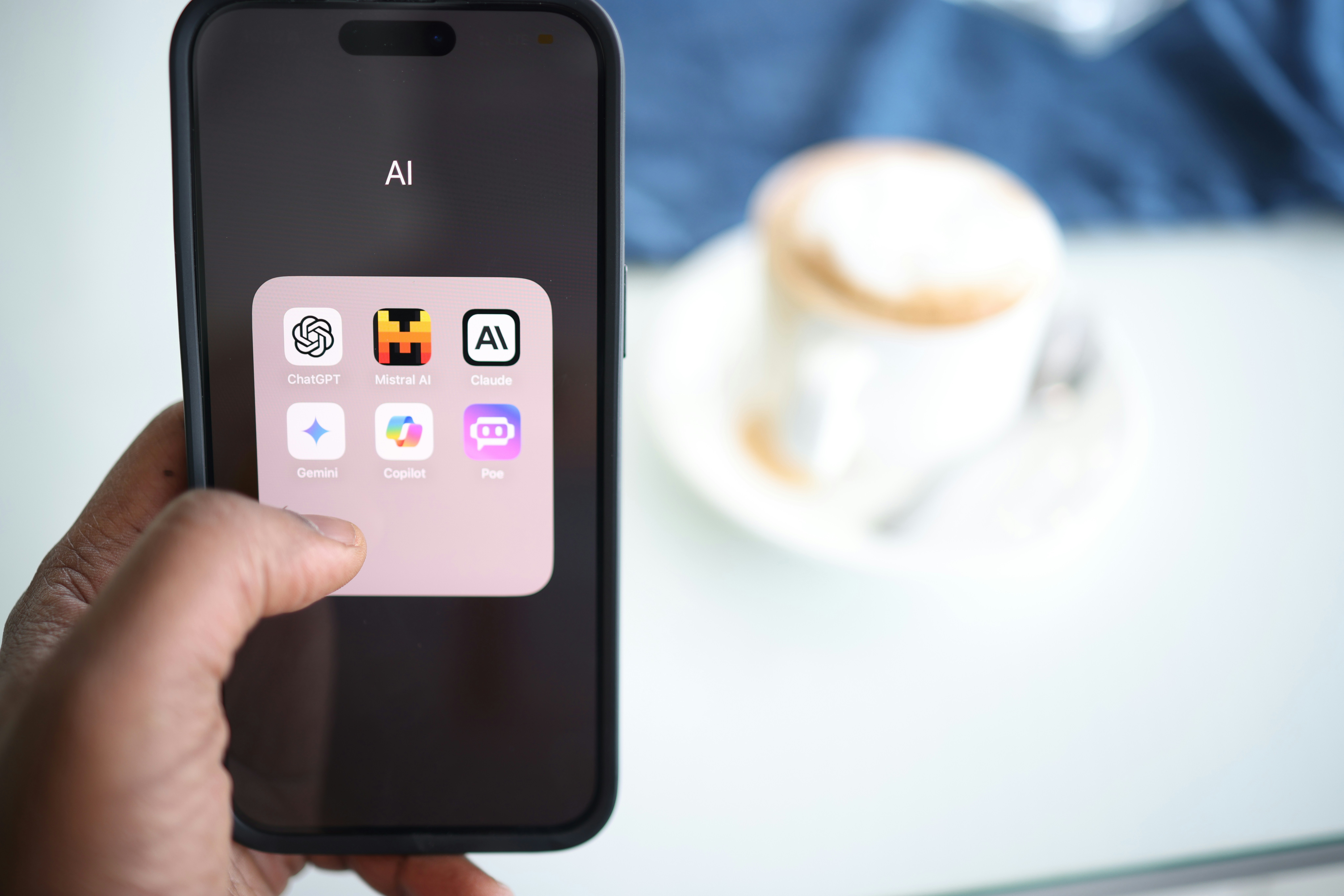
<p>Over the past 1.5 years, I’ve been trying out many of the LLM products out there for researching a topic, curbing my curiosity, or solving something related to work. I’ve explored ChatGPT, Claude, Gemini, and Perplexity (which by default uses Meta’s Llama). I must say, students of all age groups in the LLM era are really lucky. They can save so many hours with these AI knowledge banks providing summarized responses. Then again, people in the 80s would say the same to us Gen Z folks about the internet.</p>

<p>Nevertheless, here are some observations that I’ve made so far after testing and bullying these LLMs for various use cases.</p>

<p><u>Coding/Programming</u> —This is every LLM’s strength (thanks to sites like Stack Overflow), but Claude is simply unmatched here. The precision with respect to the output, code debugging, and the ability to tweak the code based on feedback is brilliant. Adding to that, Claude outputs the code in an “artifact,” which makes it user-friendly to read and iterate on the code. Although the artifact is overkill at times, where even a simple copy or text output is thrown into an artifact, it’s still quite useful for coding. Hands down, the best LLM so far for programming. Great stuff, Anthropic! Although the solutions may not work at times, that’s where you as a human come in.</p>

<p>On another note: There’s this huge debate about AI replacing engineers and product managers, with both sides defending each other. I would say it can go both ways. Product managers like me can now build prototypes and possibly push production-level code in the future and iterate on products without relying on engineering. Engineers can semi-automate programming and take over PM roles by executing many of the tasks using AI, like building roadmaps, writing PRDs, market research, etc. In any case, personally, I believe that irrespective of the function, soft skills and EQ will matter the most, and whoever excels at that won’t have to worry about their jobs getting demolished by AI.</p>

<p>Back to LLMs.</p>

<p><u>Research</u> —This is probably the single most beneficial thing that came out of LLMs. The amount of man-hours saved by avoiding the pain of opening multiple links on Google search only to find nonsense is just a lifesaver. I’ve shifted from Google to Perplexity for all things research for the last few months. No annoying sponsored links too (For now). I’m just going to leave this quote from Aravind Srinivas, CEO of Perplexity. “Perplexity’s search queries on average have more keywords compared to Google’s search queries.”.</p>

<p>I use Google only for finding a specific link, like a government website or a specific restaurant, given the strong indexing and SEO capability that search engines thrive on. Companies like Perplexity and Google’s Gemini are already solving this. I can find restaurant location links on these tools, but there’s still an error rate.</p>

<p>Talking about some negative thoughts.</p>

<p><u>Quality of output</u> — this is an interesting thing about LLMs. Whatever LLMs give as an output is mostly from data that it has seen from the internet. It’s really smart at summarizing the information within a fixed token/word limit. Therefore, it works very well for generic use cases like resume review, writing an email, researching a topic, etc. However, when it comes to specific use cases or creative writing like providing a bedtime story or a mindfulness session, the output is still good, except if you need variations, it takes some prompting. I’ve personally struggled to generate variety in output for niche cases and had to put a lot of effort into prompting. Still hasn’t solved the problem completely. One way is to use function calling and connect external APIs or RAGs. It isn’t the LLM’s fault. It simply hasn’t seen enough variety in training data for some of the use cases.</p>

<p>Another problem is long-form content. Think of anything more than 1500-2000 words. LLMs struggle at this, given they can’t hold so much context and maintain consistency while generating the text. There are some workarounds for this, like a chain of prompts, but there’s still a long way to go.</p>

<p>Maybe AGI will solve these two issues.</p>

<p><u>User Experience</u> — Seriously, all these AI companies need to put some effort here. Barring Perplexity, maybe the rest can put more thought into their UI. You can just go to the reviews section of these apps on the Play Store if you think I’m lying. A simple function like searching your previous queries doesn’t work well on Claude, at least. The web apps that I use heavily are buggy with respect to the outputs and navigation. This is probably the easiest thing to solve, and maybe they don’t see the ROI yet. Nevertheless, hope they improve it.</p>

<p>Lastly, not a complaint but an improvement that I am really interested to see. Model personalization. If the models can learn about me, my interests, and my style over time as I query, it will exponentially increase the relevance of outputs. Today, it’s simply not feasible to retrain models for each user and may require other techniques, but it’s something to look forward to in the future.</p>

<p>Overall, LLMs are a disruptive technology that can make your life better if you know how to use them. Everyone who uses or intends to use LLMs should learn prompting. Use the tech. Automate. Save time. Repurpose for other activities like improving your communication skills, doing a hobby, or socializing. My cringe quote of the day: The more the AI, the greater the need to become more human.</p>

<p>Photo by <a href="https://unsplash.com/@solenfeyissa?utm_content=creditCopyText&amp;utm_medium=referral&amp;utm_source=unsplash">Solen Feyissa</a> on <a href="https://unsplash.com/photos/a-person-holding-a-cell-phone-in-their-hand-hWSNT_Pp4x4?utm_content=creditCopyText&amp;utm_medium=referral&amp;utm_source=unsplash">Unsplash</a></p>]]></content><author><name>Rishi Kashyap</name></author><category term="ai" /><summary type="html"><![CDATA[A few thoughts on LLMs and their applications]]></summary></entry><entry><title type="html">AI - My Thoughts</title><link href="https://kolli.vercel.app/ai/2024/11/18/ai_1.html" rel="alternate" type="text/html" title="AI - My Thoughts" /><published>2024-11-18T16:12:12+05:30</published><updated>2024-11-18T16:12:12+05:30</updated><id>https://kolli.vercel.app/ai/2024/11/18/ai_1</id><content type="html" xml:base="https://kolli.vercel.app/ai/2024/11/18/ai_1.html"><![CDATA[<p><img src="/assets/images/ai.jpg" alt="Artificial intelligence banner" style="align:left" /></p>

<p>Ever since ChatGPT—OpenAI’s premier product burst onto the scene around 2022, the world has changed rapidly, with large language models opening up new possibilities every day. Adding to this, other multimodal models like text-to-video, speech-to-text are seeing massive growth over the last few months - Sora, Dall-E, Stable Diffusion, Veo… the list keeps growing. ChatGPT has had the most marketing, of course, and this is evident with their user base, but companies like Anthropic, Google, and Meta have caught up with their frontier models. I personally prefer Anthropic’s Claude Sonnet-3.5 over other models and use Perplexity (not exactly a model but a pretty good product), but that’s a blog for another day.</p>

<p>While this might look like a 3-year journey, AI research goes back decades with scientists taking inspiration from our brain’s neurons and replicating it by creating a “neural network” - a core foundation of all LLMs along with the multitude of other things like deep learning, complex algorithms, and novel approaches like the one proposed in this landmark paper by Google scientists - <a href="https://arxiv.org/abs/1706.03762"> Attention is all you need</a>.</p>

<p>We are just getting started on this, and the world is moving at a pace like never before with AI. For the average person like you and me, it’s all about our jobs at the end of the day. Will it change? How will it change? Will my role die? If you’re working in the tech industry and not thinking about any of these questions, you better start now.</p>

<p>The way we work is going to change. It’s going to affect a diverse set of roles in tech, right from engineering, design, operations, product, legal, business, etc. Maybe business execs will be the last in the line because, you know, they call the shots, but the rest are in for a crazy ride in the coming years.</p>

<p>Automation can be a thriving business sector on its own, with a lot of companies already building solutions to automate and improve processes or systems using AI. This would mean the tools that we use will evolve, and some of our skills could be of no use in the future. Take SQL. Data analysts, for example, write SQL queries to extract insights. There will be a day in the near future where AI can fully take over this process, and product managers like me could just enter a search query. “Why is my revenue flat in the last 2 weeks?” and AI could spit out insights within a few minutes. There might be companies already providing solutions for this.</p>

<p>But there’s hope. New roles will be created, and some existing roles will thrive. Prompt engineering, compliance, ethical usage, infrastructure, and sustainability, to name a few, will add new roles. Functions like data science, AI research, and backend engineering will boom. Our current roles, including non-engineering, will evolve too, and the best thing one can do right now is to just start thinking about AI and its implications. Like folks on the internet say, AI will replace those who don’t know how to use AI. There are a plethora of courses and material out there. Doing some courses, listening to thinkers like Ilya Sutskever, Andrew NG, and Andrej Karpathy, and following the latest advancements is a great start to planning your future with this disruptive tech making waves.</p>

<p>This might sound like doomsday talk, but I believe the reasons why AI hasn’t significantly affected our job roles yet are primarily because of cost, security, and compliance aspects. AI infrastructure, for example, is quite expensive, but companies will look to resolve these bottlenecks in due course. Until then, it’s up to us to learn, upskill, and be prepared.</p>

<p>Photo by <a href="https://unsplash.com/@solenfeyissa?utm_content=creditCopyText&amp;utm_medium=referral&amp;utm_source=unsplash">Solen Feyissa</a> on <a href="https://unsplash.com/photos/a-close-up-of-a-person-touching-a-cell-phone-GZyELVkOmi0?utm_content=creditCopyText&amp;utm_medium=referral&amp;utm_source=unsplash">Unsplash</a></p>]]></content><author><name>Rishi Kashyap</name></author><category term="ai" /><summary type="html"><![CDATA[Where are we heading with AI?]]></summary></entry><entry><title type="html">Product Management - Experience so far</title><link href="https://kolli.vercel.app/product/2024/09/29/pm.html" rel="alternate" type="text/html" title="Product Management - Experience so far" /><published>2024-09-29T21:12:12+05:30</published><updated>2024-09-29T21:12:12+05:30</updated><id>https://kolli.vercel.app/product/2024/09/29/pm</id><content type="html" xml:base="https://kolli.vercel.app/product/2024/09/29/pm.html"><![CDATA[<p><img src="/assets/images/pm.jpg" alt="Product management banner" style="align:left" /></p>

<p>2024 so far has been a rollercoaster ride with my job role pivoting towards product management. I never really thought that I would take up this role when I first started my career. It was only when I got exposed to this job function that my interests started to align with product management. Half of the job is around people management/soft skills, and the rest boils down to your skills in terms of creativity, analytical thinking, problem solving, and execution.</p>

<p>Given the startup nature of the products that I was working on, roadmaps change at a weekly level, and it required me to have breakneck execution speed and prioritization where getting things done is paramount. I am glad that I could exercise these skills, given that not many companies, especially the big tech ones like Microsoft or Amazon, operate with this style. They do their planning probably weeks or months in advance before beginning their development cycles.</p>

<p>Stakeholder management can make or break a product manager in my opinion if you’re not the only product manager on the team. That’s one of the core tenets on which a PM role was originally designed: where they take the headache away from engineering and face stakeholders and customers. In a startup setup, this becomes more evident where resources are limited and prioritization is brutal. Thankfully, my experience with business operations and working directly with clients has helped me hone some of this skill.</p>

<p>While I’ve challenged some of these traits, I do have gaps in my inability to spend time on product strategy and wireframes where a few iterations are necessary to get things right. I mostly took inspiration from other apps. My creative abilities have not been fully tested, and that’s something that I definitely want to work on. Going beyond what’s possible and the ability to get crazy in creating novel solutions is probably my most ambitious skill to chase.</p>

<p>One thing’s for sure: you cannot read or take a course and become a product manager. It’s more than creating wireframes and writing product requirements documents.  It’s a holistic role with a mixture of soft and technical skills that can only be enhanced with real-world experience.</p>

<p>Photo by <a href="https://unsplash.com/@jexo?utm_content=creditCopyText&amp;utm_medium=referral&amp;utm_source=unsplash">Jexo</a> on <a href="https://unsplash.com/photos/black-laptop-computer-beside-books-fJ6r_mkHrsw?utm_content=creditCopyText&amp;utm_medium=referral&amp;utm_source=unsplash">Unsplash</a></p>]]></content><author><name>Rishi Kashyap</name></author><category term="product" /><summary type="html"><![CDATA[What I understand about product management]]></summary></entry><entry><title type="html">My IELTS Experience</title><link href="https://kolli.vercel.app/general/2024/09/05/ielts.html" rel="alternate" type="text/html" title="My IELTS Experience" /><published>2024-09-05T08:12:12+05:30</published><updated>2024-09-05T08:12:12+05:30</updated><id>https://kolli.vercel.app/general/2024/09/05/ielts</id><content type="html" xml:base="https://kolli.vercel.app/general/2024/09/05/ielts.html"><![CDATA[<p><img src="/assets/images/ielts.jpeg" alt="IELTS test preparation banner" style="align:left" /></p>

<p>The IELTS test is a common requirement for non-native English speakers who wish to study or work abroad in English speaking countries. I won’t delve into the IELTS test <a href="https://ielts.org/take-a-test/test-types/ielts-academic-test">format</a> in detail, you can find more information on their website. However, I would like to share some things from my experience of studying and getting a 8.5 band on this test.</p>

<p>If you’re somebody who studied English at school and have been consistently using English throughout school, college and work, the IELTS is generally easy for you and you can take this test within 2-3 weeks of preparation. Especially, if you’re someone who watches a lot of Hollywood, TV shows, reads articles/blogs/posts on social media, IELTS is something you can crack with a decent amount of effort.</p>

<p>Having said that, one can’t take it for granted. You need to know the test pattern, the type of questions that are asked across each section - Listening, Speaking, Reading and Writing so that you don’t make silly mistakes in the test.</p>

<h2 id="breaking-it-down">Breaking it down</h2>

<h3 id="know-the-test-and-estimate-your-preparation">Know the test and estimate your preparation</h3>

<p>After going through the test pattern and commonly asked questions, I estimated the amount of preparation that I would need. Taking a mock test helped. There are a bunch of free tests provided by IELTS and British council. Once again, if you’re a intermediate user of English, you wouldn’t need more than 2-3 weeks. If you’re somebody who knows English but still isn’t well versed with grammar and you’re too comfortable with colloquial English, maybe you’ll need 4-5 weeks.</p>

<h3 id="book-the-test">Book the test</h3>

<p>Booking the test a few weeks/months before preparation is important for any test. It gets you into a cadence where you put in the hours to prepare. Otherwise, you’ll just get lazy, wasting time and start preparing when the test is near. This test is pretty expensive (around $200 or Rs.17000) so unless you’re from the affluent class with money to waste, you woudn’t want to leave this to chance.</p>

<h3 id="a-good-score">A good score</h3>

<p>Most B-schools or engineering universities usually ask for a 7.0/7.5+ <a href="https://ielts.org/organisations/ielts-for-organisations/ielts-scoring-in-detail"> band score </a> with some top schools asking for an 8+ band.</p>

<p>There are four sections in this test - Listening, Reading, Writing and Speaking. All of them are marked out of 9 and they average the score and round it off in increments of 0.5, so if you got 8,8,7.5,7 your score will be 7.5 (for more - <a href="https://ieltsliz.com/ielts-band-scores/">https://ieltsliz.com/ielts-band-scores/</a>)</p>

<h3 id="breaking-down-the-different-sections">Breaking down the different sections</h3>

<p>I’m someone who doesn’t write much so I was pretty sure my grammar and lexical accuracy was not the best. Therefore, I strategized to cover for this using the other sections.</p>

<h4 id="listening--reading">Listening &amp; Reading:</h4>

<p>These are relatively easier sections compared to writing and listening. A 9 band score is very much possible. This will boost your average and even if you take a hit in writing and speaking, you can get a 8+ band.</p>

<p>For Listening you would mainly need focus and the ability to understand UK/US accents. I practiced this using the free tests. I wouldn’t really recommend buying a course for this but if you want to practice more questions you can. Usually these paid courses market themselves as affordable courses but have too many mistakes in their answers.</p>

<p>As I listened to a pre-recorded speech, I would start preempting the answers and filling up the responses. 60-70% of the time you would be right and for the rest you would need to change the answers. They give a few seconds to read the questions which helps to create a mental mapping of keywords that you can pay attention to in the recording.</p>

<p>For Reading - if you’re someone who is preparing for GRE/GMAT, you wouldn’t need too much practice. I just gave a few mocks to understand the question types. Skimming through the text and knowing where to find the answer is sufficient.</p>

<p>Be careful about this question type though - TRUE/FALSE/NOT GIVEN. It’s very easy to make mistakes and get confused between FALSE and NOT GIVEN.</p>

<p>I got a 9 and 8.5 for listening and reading.</p>

<h4 id="writing--speaking">Writing &amp; Speaking:</h4>

<p>Writing - This will probably be the hardest part of IELTS if you aren’t someone who regularly writes long form content like me. You will end up typing your conversational words which may not be graded well. Look up the grading requirements for a <a href="https://ielts.idp.com/results/scores/writing"> 8+ score </a> and go through a few sample tests. Personally, I didn’t spend much time on this and ended up getting a 7.5. Practice is the only way to improve writing and you can’t master this in 2-3 weeks. I just went through sample answers and the grading criteria which helped especially in Task 2.</p>

<p>Speaking - This is an interesting section. Mostly they are looking for coherence, your ability to formulate statements without taking too much time and your strength in vocabulary. There is a section where you’ll be given a cue card with a topic and you’ll have to speak for more than 1-2 mins. You’ll get a bunch of cue cards online for practice. If you don’t know anything, just make up stuff. They aren’t checking for the validity of what you’re saying but how well you can formulate statements. Don’t go blank or use filler words like um, ahh for too long. Just keep speaking what comes to your mind with the right grammar. Mostly the questions are about topics that you are well aware of like sports, hobbies, work, studies etc.</p>

<p>I made the mistake of speaking too fast on the cue card section and didn’t have much to say. I also didn’t pronounce few words clearly (due to my speed) which the examiner may not have understood. I ended up with a 8 on this.</p>

<h3 id="conclusion">Conclusion</h3>

<p>Overall, knowing the test pattern, question types and the knack for answering should take you across the finish line. I wouldn’t reccomend spending too much on paid courses. Free resources online should be enough. Solving crosswords or playing word games can also boost your english language skills. You’ll have to anyway spend a lot on other things if you’re planning to study abroad.</p>

<p>Some resources that helped me:</p>
<ul>
  <li><a href="https://www.youtube.com/@Ieltsadvantage"> IELTS Advantage Youtube Channel </a></li>
  <li><a href="https://ieltsliz.com/">https://ieltsliz.com/</a></li>
  <li><a href="https://takeielts.britishcouncil.org/take-ielts/prepare"> British Council Website </a></li>
</ul>]]></content><author><name>Rishi Kashyap</name></author><category term="general" /><summary type="html"><![CDATA[My experience after taking the IELTS test]]></summary></entry><entry><title type="html">Welcome to My Bay</title><link href="https://kolli.vercel.app/welcome/2024/09/04/welcome-to-jekyll.html" rel="alternate" type="text/html" title="Welcome to My Bay" /><published>2024-09-04T21:10:12+05:30</published><updated>2024-09-04T21:10:12+05:30</updated><id>https://kolli.vercel.app/welcome/2024/09/04/welcome-to-jekyll</id><content type="html" xml:base="https://kolli.vercel.app/welcome/2024/09/04/welcome-to-jekyll.html"><![CDATA[<p>Hey There! Thanks for visiting my blog.</p>

<p>I started this blog after realizing that I needed to improve my writing skills. A personal portfolio+blog website is also one of the best ways to reflect on yourself time to time and see how far you’ve come. This blog will now become a place to pen down my thoughts.</p>

<p>This website was setup using Jekyll and Vercel. It’s so easy these days to create and deploy a website and this was fun to setup :). I personally didn’t want to use sites like Wordpress/Wix since here you can get more control and learn some stuff about creating websites.</p>

<p>Happy Reading!</p>

<p>NOTE: The views and opinions expressed on this blog are solely my own and are for informational and entertainment purposes only. They do not constitute professional advice. Readers should not rely on this content as a substitute for professional guidance in any area, whether personal, financial, health, or professional. I am sharing my personal experiences and perspectives, which may change over time.</p>]]></content><author><name>Rishi Kashyap</name></author><category term="welcome" /><summary type="html"><![CDATA[Hey There! Thanks for visiting my blog.]]></summary></entry></feed>